KryllOS is more than an automated trading platform. It's an ecosystem: a visual no-code editor, a marketplace for bots and custom blocks, an AI layer for vibe-coding your strategies, and at the heart of it all, a token that serves as the economic backbone. KRL isn't a gimmick, it's the economic fuel that aligns users, creators, and the platform.
Token Basics
KRL is the native utility token of the Kryll ecosystem. Launched via ICO in early 2018, it raised $2.2M and laid the project's foundations. Eight years later, it's back at the center of the action with KryllOS.
A few fundamentals to keep in mind:
- Standard: ERC-20
- Max supply: 49,417,348 KRL
- Multi-chain: natively deployed on Ethereum, Base, Arbitrum, and Optimism
- Availability: traded on Coinbase, KuCoin, Gate.io, Crypto.com, MEXC, CoinEx, and accessible on DEX via Uniswap V3
One important point: all KRL currently in circulation is fully unlocked. There is no active vesting, no upcoming unlock schedule. The supply is fixed and non-mintable, a clean, predictable foundation for everything that follows.
The Marketplace's Single Currency
Every transaction on the KryllOS marketplace is designed to go through KRL. Whether you're buying a ready-to-use trading strategy, a custom block, an app, or a skill for your AI agent, you pay in KRL. The publisher receives KRL.
No fiat, no stablecoins, no alternatives. A single rail, simple and predictable. This unification has a direct consequence: every transaction feeds the same economy. The more volume the marketplace generates, the more sustained demand builds around KRL.
How a Single Purchase Powers an Entire Ecosystem
With every marketplace purchase, the KRL spent is distributed among three beneficiaries:
- The Publisher
The creator of the bot, block, or application receives their share. This is the foundation of a real creator economy: the more useful content you publish and the more it gets used, the more you earn. The original Kryll marketplace already proved this model works, top creators generated genuine passive income from it. KryllOS takes that further, adding custom blocks and an AI layer that dramatically lowers the barrier to publishing. - Kryll
A share goes to the team to fund development, infrastructure, and operations. This is what keeps the product free: no subscriptions, no trading fees, no custody. The marketplace funds the platform instead of billing the end user. - Stakers
A share is redistributed to holders who have actively staked their KRL, in the form of real yield paid out by actual marketplace activity. This is an intentional, participatory mechanism: simply holding KRL in a wallet doesn't earn you anything. It's the deliberate act of staking that opts you into the revenue-sharing engine.
Real Yield, Not Disguised Inflation
The word "yield" is overused in crypto. Most projects that promise it operate through inflationary emission: new tokens are minted to pay stakers. The result is that non-staking holders get diluted, and the displayed APY reflects no real value creation.
KRL works in the opposite direction. The supply is fixed: 49,417,348 tokens, full stop, no minting possible. The yield distributed to stakers doesn't come from emission, it comes from real purchases made on the marketplace by real users. It's closer to a corporate dividend than a synthetic APY.
In practice: the yield is sustainable because it's backed by actual economic activity. And staking holders capture their share without diluting those who don't stake.
A path worth considering: Burn & Buyback
A portion of the KRL collected through the marketplace could be burned, mechanically reducing the circulating supply. Additionally, in cases where the platform generates revenue in fiat or currencies other than KRL, a buyback mechanism could be considered, repurchasing KRL on the open market to redistribute or burn it, creating structural buying pressure on the token.
Publication Collateral
For a marketplace to stay healthy, publishers need a direct incentive to be serious. One option being strongly considered: requiring a KRL deposit as collateral in order to publish on the marketplace.
This collateral would serve as an integrity guarantee, a publisher who releases defective or fraudulent content loses all or part of their deposit. Conversely, an active and honest publisher sees their collateral grow over time, with a portion of their earnings automatically reinvested into it.
When a publisher decides to leave the ecosystem, they recover their full accumulated collateral. It's a mechanic that creates genuine long-term stakes without imposing excessive friction at the point of entry.
The Self-Reinforcing Loop
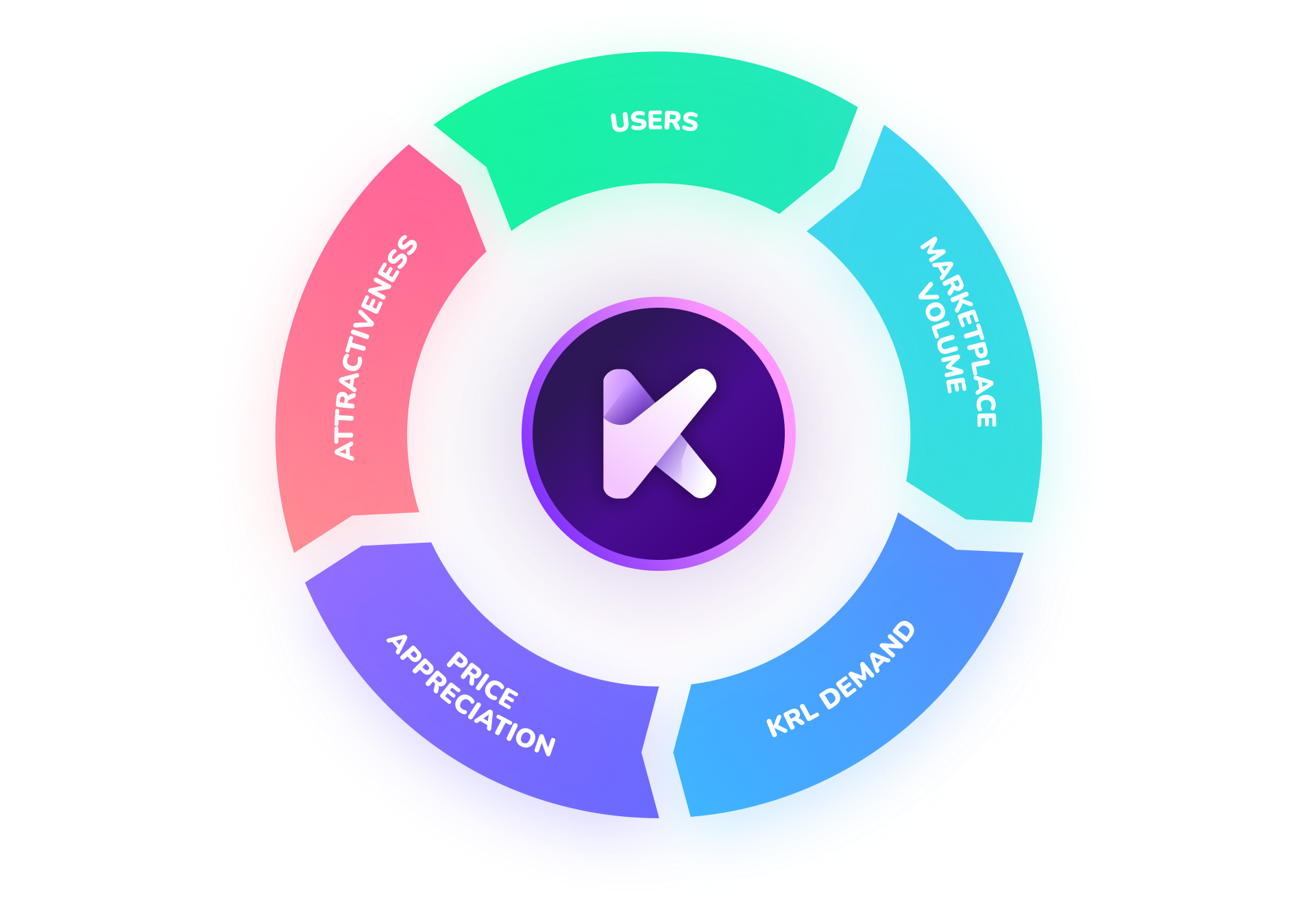
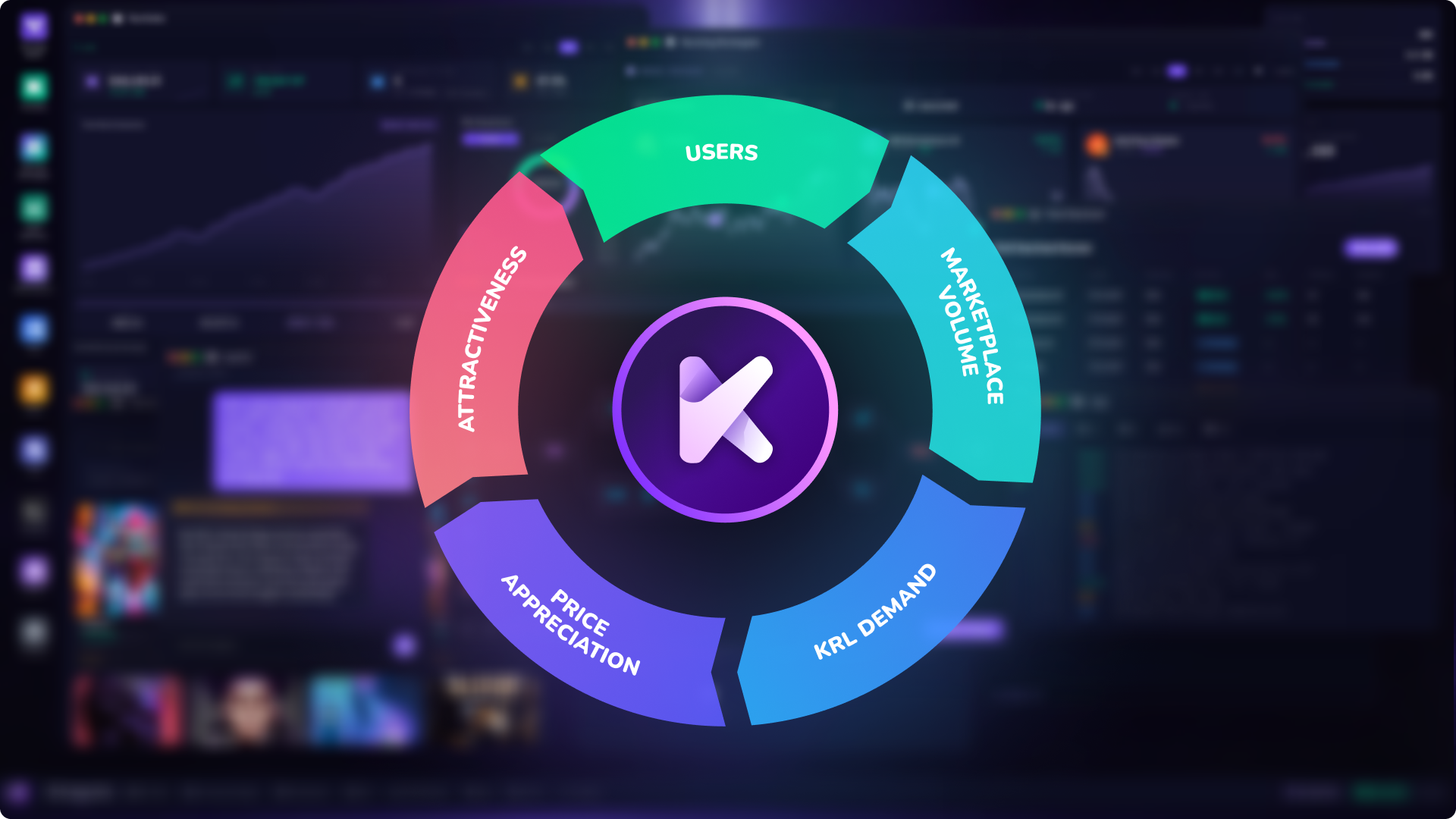
Put together, these mechanics create a virtuous cycle, a flywheel, that strengthens itself over time.
More users on KryllOS → More marketplace volume → More buying pressure on KRL → Greater attractiveness and visibility → Repeat
Every participant benefits from everyone else's success. Users want a rich marketplace. Creators want a large user base. Stakers want both sides of the market to grow. And Kryll, as the platform, lives off the same flow. Nobody is playing against anyone else, the exact opposite of classic SaaS models where the platform extracts rent at users' expense.
What KRL Makes Possible That Nothing Else Could Fund
Kryll makes strong product choices that set it apart: open source, self-hostable, free, non-custodial. Kryll never touches user funds and takes nothing from their trades. No subscriptions, no paywalls, no friction.
In that context, one might wonder why have a token at all. The answer comes down to one word: alignment.
With KRL, the ecosystem finances its own growth. The platform stays free because the marketplace funds development. Creators earn a living because users buy their work. And holders who believe in the project capture a direct share through real yield.
KRL isn't a financial layer bolted onto the product. It's what makes the product possible in its current form: open, free, sovereign, and viable for the long term.